
ETF vs Index Fund: What Actually Makes More Money?
Investors looking to grow their money often come across two popular investment options: ETFs (Exchange-Traded Funds) and Index Funds. Both are widely recommended by financial experts because they offer diversification, relatively low fees, and access to the broader stock market.
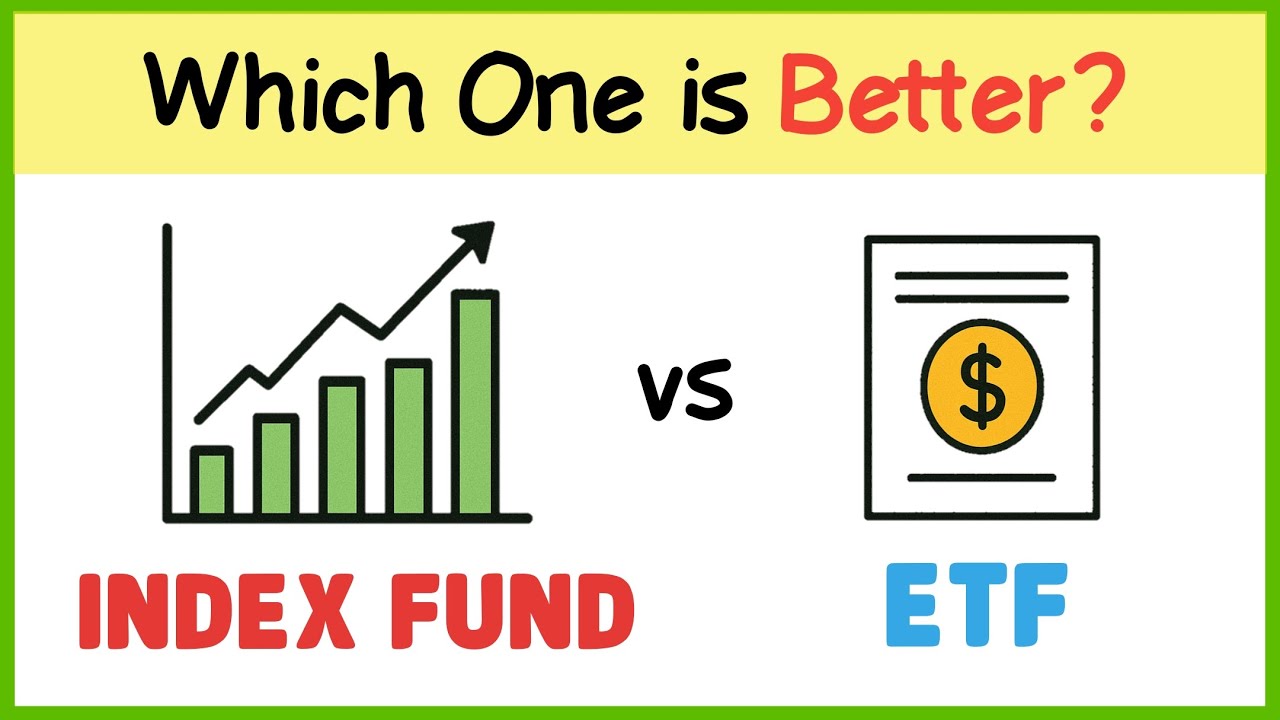
However, many beginners ask an important question: Which investment actually makes more money — ETFs or Index Funds?
The answer is not always straightforward. Both investment types are closely related and often track the same market indexes. Yet, they differ in structure, trading methods, tax efficiency, and cost structure.
In this guide, we will explore the differences between ETFs and index funds, their advantages and disadvantages, and which one may generate higher returns depending on your investment strategy.
Understanding ETFs and Index Funds
Before comparing potential returns, it’s important to understand what ETFs and index funds actually are.
What Is an ETF?
An Exchange-Traded Fund (ETF) is an investment fund that holds a collection of assets such as stocks, bonds, or commodities. ETFs are traded on stock exchanges, just like individual stocks.
This means investors can buy or sell ETF shares throughout the trading day at market prices.
Investment firms such as Vanguard and BlackRock offer many ETFs designed to track major market indexes.
Official websites:
https://www.vanguard.com
https://www.blackrock.com
Some popular ETF categories include:
-
Stock market ETFs
-
Bond ETFs
-
Sector ETFs
-
International market ETFs
Because ETFs contain multiple assets, they allow investors to diversify their portfolios with a single investment.
What Is an Index Fund?
An index fund is a type of mutual fund designed to track the performance of a specific market index, such as the S&P 500.
Instead of actively selecting stocks, index funds automatically mirror the holdings of the index they follow.
Investment companies such as Fidelity Investments and Charles Schwab provide index funds that track major stock market indexes.
Official websites:
https://www.fidelity.com
https://www.schwab.com
Index funds became extremely popular because they offer:
-
Broad diversification
-
Lower management fees
-
Long-term market performance
Many financial advisors recommend index funds for long-term investors who want steady market exposure.
The Role of Market Indexes
To understand the difference between ETFs and index funds, it’s important to first understand the role of market indexes. Both investment vehicles are designed to track the performance of a specific financial index, which serves as a benchmark for measuring the overall performance of a segment of the stock market.
A market index represents a collection of selected stocks that reflect the performance of a particular market or sector. Instead of analyzing hundreds or thousands of individual companies, investors can use indexes as a simplified snapshot of market performance.
Many ETFs and index funds track widely recognized indexes such as the S&P 500, which includes approximately 500 of the largest publicly traded companies in the United States.
According to investor education resources from Investor.gov, market indexes help investors measure the performance of the stock market and compare how their investments perform relative to the broader economy.
Official resource:
https://www.investor.gov/introduction-investing/investing-basics/what-index
Why Market Indexes Matter for Investors
Market indexes play an essential role in modern investing because they provide a standardized way to track and evaluate financial markets.
Instead of trying to select individual winning stocks, investors can invest in funds that track an index. This strategy allows investors to capture the overall growth of the market rather than relying on the performance of a single company.
Some of the major reasons market indexes are important include:
-
They provide a benchmark for market performance
-
They help investors diversify their portfolios
-
They simplify investment decisions
-
They reduce the need for active stock selection
Many passive investment strategies rely heavily on index tracking because it provides broad exposure to the market while keeping management costs relatively low.
The S&P 500 as a Benchmark
One of the most commonly tracked market indexes in the world is the S&P 500. This index includes large U.S. companies from sectors such as technology, healthcare, finance, and consumer goods.
Companies commonly included in the index are industry leaders like:
-
Apple
-
Microsoft
-
Amazon
-
Alphabet
-
Johnson & Johnson
The index is widely used by investors, analysts, and financial institutions as a benchmark for evaluating overall market performance.
Historical data from S&P Dow Jones Indices shows that the S&P 500 has delivered average annual returns of roughly 8–10% over long periods, although short-term performance can fluctuate due to economic conditions and market cycles.
Official website:
https://www.spglobal.com/spdji
Because of its broad representation of large U.S. companies, many ETFs and index funds are designed to mirror the performance of this index.
Other Popular Market Indexes
While the S&P 500 is one of the most widely recognized indexes, it is not the only one used in investment strategies.
Other popular indexes include:
-
The Dow Jones Industrial Average, which tracks 30 major U.S. companies.
-
The Nasdaq Composite, which focuses heavily on technology companies.
-
The Russell 2000, which tracks smaller companies.
Each index represents a different segment of the market, allowing investors to diversify across various sectors and company sizes.
Financial education resources from the Financial Industry Regulatory Authority explain how different indexes help investors measure performance across various parts of the market.
Learn more here:
https://www.finra.org/investors
How ETFs and Index Funds Track Indexes
Both ETFs and index funds are designed to replicate the performance of a market index as closely as possible.
Fund managers achieve this by purchasing the same stocks included in the index and maintaining similar weightings. For example, if a company represents 6% of the S&P 500, the fund will allocate roughly the same percentage to that company.
This process allows ETFs and index funds to mirror the movements of the underlying index.
Because they follow a passive investment strategy, these funds typically have:
-
lower management fees
-
reduced trading activity
-
predictable performance relative to the index
This approach has become extremely popular among long-term investors who prefer steady market exposure rather than active stock trading.
Why ETF and Index Fund Returns Are Often Similar
Since both ETFs and index funds frequently track the same indexes, their long-term returns are usually very similar.
For example, an ETF that tracks the S&P 500 and an index mutual fund tracking the same benchmark will generally rise or fall with the overall market.
The small differences in performance between these funds often come from factors such as:
-
management fees
-
tax efficiency
-
trading costs
-
fund structure
Over long periods, these differences may slightly affect overall returns, but the underlying index remains the primary driver of performance.
Internal Resources You Can Explore
If you want to learn more about building wealth through smart financial strategies, you may also find these guides helpful:
-
“Side Hustles You Can Scale Into Full-Time Businesses” for ideas on creating additional income streams.
-
“Passive Income Ideas That Will Work in 2026” for strategies that combine investing and income generation.
These resources complement investment strategies by helping readers understand how to grow income and invest consistently.
Final Thoughts
Market indexes play a fundamental role in modern investing by providing a simple and effective way to track the performance of the broader financial markets. By investing in ETFs or index funds that follow major benchmarks like the S&P 500, investors can gain exposure to hundreds of companies through a single investment.
Because both ETFs and index funds often track the same indexes, their long-term performance tends to be very similar. Understanding how market indexes work helps investors make informed decisions and develop strategies focused on diversification, consistency, and long-term growth.
Key Differences Between ETFs and Index Funds
Although ETFs and index funds often track the same markets, they differ in several ways that may affect how investors use them.
Trading Flexibility
One major difference is how they are traded.
ETFs can be bought and sold throughout the trading day, just like stocks. This provides investors with greater flexibility to react to market changes.
Index funds, on the other hand, are typically priced once per day after the market closes.
For long-term investors, this difference may not significantly affect returns. However, active traders often prefer ETFs because they allow real-time trading.
Minimum Investment Requirements
Some index funds require a minimum investment amount, which could range from a few hundred to several thousand dollars depending on the provider.
ETFs typically allow investors to buy a single share, making them more accessible for beginners with limited capital.
This flexibility has made ETFs increasingly popular among new investors.
Read Also: Top Business Grants and Government Funding Programs You Can Apply for Before Year End 2026
Expense Ratios and Fees
Investment fees can significantly impact long-term returns.
Both ETFs and index funds usually have lower expense ratios compared to actively managed funds.
Companies like Vanguard are known for offering extremely low-cost funds.
Lower fees mean investors keep more of their investment returns over time.
Tax Efficiency
Another difference between ETFs and index funds is tax efficiency.
ETFs often use a structure that allows them to minimize capital gains distributions. This can reduce taxable events for investors holding ETFs in taxable accounts.
Index funds may distribute capital gains to investors more frequently, depending on how the fund is managed.
Tax considerations can influence which investment generates higher after-tax returns.
Do ETFs or Index Funds Make More Money?
In many cases, ETFs and index funds that track the same index produce nearly identical returns.
For example, an ETF tracking the S&P 500 and an index fund tracking the same index should perform very similarly before fees and taxes.
The actual difference in earnings often depends on factors such as:
-
Expense ratios
-
tax efficiency
-
trading costs
-
investor behavior
Because these factors vary, neither ETFs nor index funds are universally more profitable.
Long-Term Investment Strategy
For long-term investors, consistency is often more important than choosing between ETFs and index funds.
Many experts emphasize the importance of:
-
regular contributions
-
long-term holding periods
-
diversified portfolios
These habits can have a larger impact on investment growth than the choice between ETF and index fund structures.
Understanding Compound Growth
Investing success often depends on the power of compounding.
This formula illustrates how investment returns can grow over time as earnings are reinvested.
Even small differences in fees or investment timing can influence the final value of an investment over long periods.
Advantages of ETFs
ETFs offer several advantages that attract many investors:
-
Intraday trading flexibility
-
Lower minimum investment requirements
-
tax efficiency in many cases
-
access to specialized market sectors
These features make ETFs appealing for both beginners and experienced investors.
Advantages of Index Funds
Index funds also offer several strong benefits:
-
Simple long-term investing strategy
-
automatic diversification
-
easy contribution through retirement accounts
-
consistent market exposure
Many retirement plans and employer-sponsored investment accounts include index funds as core investment options.
Which Option Is Better for Beginners?
For beginners, the best choice often depends on investment goals and personal preferences.
Investors who prefer simplicity and automated investing may find index funds easier to manage.
Those who want flexibility and lower entry barriers may prefer ETFs.
Regardless of the choice, both investment types can support long-term wealth building when used responsibly.
Common Mistakes Investors Should Avoid
When comparing ETFs and index funds, investors should avoid several common mistakes.
Chasing Short-Term Returns
Trying to quickly profit from market fluctuations can increase risk and reduce long-term gains.
Ignoring Investment Fees
Even small fees can significantly reduce returns over long periods.
Lack of Diversification
Investors should avoid concentrating their investments in a single asset or sector.
A diversified portfolio helps reduce risk and improve long-term stability.
Frequently Asked Questions
Are ETFs safer than index funds?
Both ETFs and index funds can be relatively low-risk investments when they track broad market indexes. However, all investments carry some degree of risk.
Do ETFs pay dividends?
Many ETFs distribute dividends based on the underlying assets they hold.
Can index funds outperform ETFs?
If an ETF and an index fund track the same index, their performance will usually be very similar before fees and taxes.
Conclusion
Both ETFs and index funds are powerful tools for long-term investors who want diversified exposure to the stock market.
In most cases, the difference in returns between the two investments is minimal if they track the same index.
The key to successful investing often lies not in choosing one over the other, but in maintaining disciplined investment habits such as consistent contributions, long-term planning, and diversification.
By understanding how ETFs and index funds work, investors can make informed decisions that align with their financial goals and risk tolerance.
Leave a Reply